Does Cayenne Pepper Lower Blood Pressure? A Science-Based Look
In a world full of confusing health advice and concerns about the side effects from long-term prescriptions, it’s no wonder so many of us are looking for natural ways to support our bodies. When it comes to something as vital as heart health, you want clear answers, not just old wives’ tales. This leads to a very common question I hear: does cayenne pepper lower blood pressure? You see it mentioned in forums and hear stories, but it’s hard to separate the real potential from the hype.
It’s a simple question with a complex answer, and that’s exactly what we’re going to explore together. We’ll dive into the science behind capsaicin-the fiery compound that gives cayenne its kick-and see what researchers have discovered about its potential to support a healthy circulatory system. By the end, you’ll have a clear, evidence-based understanding of the potential benefits, the risks, and how you can safely use this common spice to feel more in control of your wellness journey.
The Core Claim: How is Cayenne Pepper Linked to Blood Pressure?
For generations, people interested in natural health have pointed to cayenne pepper as more than just a kitchen spice. It has a long-standing reputation as a powerful circulatory aid, something believed to get the blood moving and support overall heart health. The central component behind these claims is a fiery compound called capsaicin-the very thing that gives chili peppers their intense heat.
But while personal stories and traditional use are valuable, they raise an important question for anyone seeking reliable answers: beyond the anecdotes, does cayenne pepper lower blood pressure in a way that science can verify? This is where we must separate long-held beliefs from measurable biological facts. To do that, we first need to understand the key ingredient at the heart of the discussion.
What is Capsaicin?
Capsaicin is a chemical compound, or alkaloid, found in chili peppers of the Capsicum genus. In nature, it serves a clever purpose: its intense, burning sensation deters mammals and fungi from consuming the plant, while birds, which don’t feel the heat, can eat the peppers and spread the seeds. You’ve likely encountered its power in topical creams, where it’s used to create a warming sensation that helps relieve muscle and joint pain.
Traditional Use vs. Modern Research
Herbalists have historically used cayenne to “warm” the body and stimulate circulation, a belief passed down through centuries of traditional medicine. Today, however, we look for more concrete evidence. Modern research aims to move beyond these traditional claims by investigating the specific biological pathways involved. Scientists are now studying things like capsaicin’s effect on blood vessels to see if these long-held beliefs stand up to scrutiny. The goal is to understand the “how” and “why” behind the folklore, providing a clear picture of what’s really happening inside the body.
With this foundation, we can now dive deeper into the potential mechanisms. Let’s explore the scientific evidence to see how this simple spice might actually influence one of the body’s most critical functions.
The Science: How Might Cayenne Pepper Affect Blood Vessels?
When we ask the question, does cayenne pepper lower blood pressure, we’re not talking about magic. We’re talking about simple, observable biological processes that nature has been using for millennia. The key player here is a powerful compound in cayenne called capsaicin-it’s what gives the pepper its signature heat. But beyond the spice, capsaicin appears to interact with our body in some truly fascinating ways that support a healthy circulatory system.
Researchers have been digging into this for years, and while no single food is a cure-all, the evidence points to several clear mechanisms. A deep dive into the collection of scientific studies on capsaicin and blood pressure shows a pattern of how this simple spice can have a profound effect. Let’s break down the three primary ways it works.
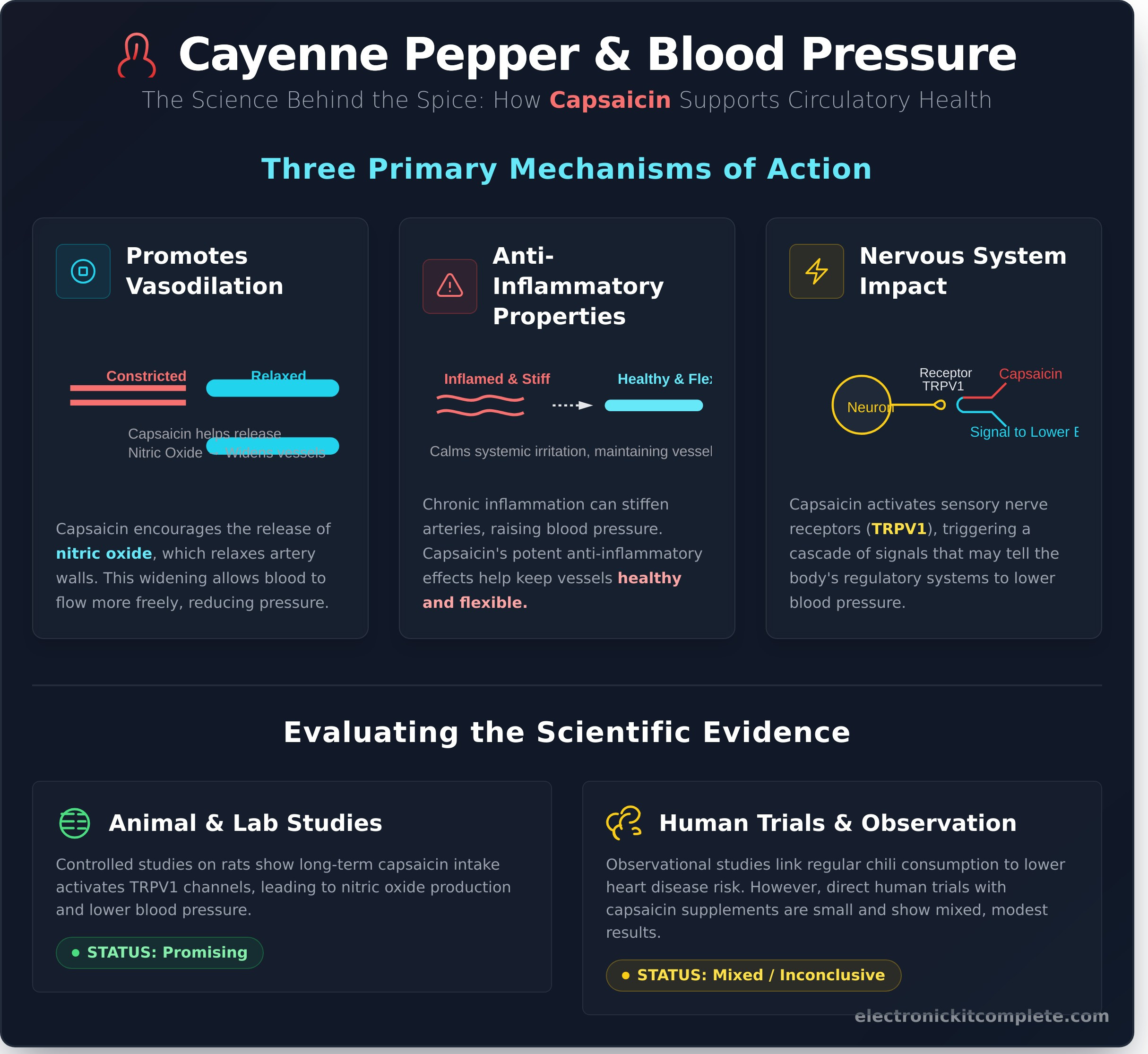
Mechanism 1: Promoting Vasodilation
Imagine your blood vessels are like a garden hose. If the hose is narrow, you need a lot of pressure to push water through. But if you use a wider hose, the water flows easily with less force. This widening process is called vasodilation. Capsaicin is believed to encourage the release of nitric oxide, a substance that tells the smooth muscles in your artery walls to relax. This relaxation widens the “hose,” allowing blood to flow more freely and reducing the pressure against the artery walls.
Mechanism 2: Anti-Inflammatory Properties
Chronic inflammation is a silent enemy of your circulatory system. Over time, it can cause your arteries to become stiff and less flexible, forcing your heart to work harder to pump blood. This is a direct path to high blood pressure. Capsaicin has demonstrated potent anti-inflammatory properties, helping to calm this systemic irritation. By keeping inflammation in check, it helps maintain the natural flexibility and health of your blood vessels.
Mechanism 3: Potential Impact on the Nervous System
This mechanism is a bit more complex, but the idea is simple. Your body has sensory nerve receptors (called TRPV1 receptors) that capsaicin directly interacts with. Think of it as capsaicin “flicking a switch.” When this switch is activated, it can trigger a cascade of signals throughout your nervous system. Some researchers believe this chain reaction ultimately communicates with the systems that regulate your blood pressure, signaling them to bring the pressure down.
Evaluating the Evidence: What Do Scientific Studies Say?
When you start digging into natural health, you find a lot of powerful claims. But as a researcher myself, I always want to see the proof. So, when it comes to the question, does cayenne pepper lower blood pressure?, we need to look past the headlines and see what the actual studies show. The picture is interesting, but it’s important to be realistic and understand the limitations.
Insights from Animal and Lab Studies
Much of the initial excitement comes from laboratory and animal research. In these controlled settings, scientists have seen capsaicin-the active compound in cayenne-work its magic. Studies on rats with hypertension have shown that long-term capsaicin intake can activate a channel in our cells (called TRPV1) which leads to the production of nitric oxide. Nitric oxide is a key molecule that helps relax and widen blood vessels, which in turn can lower blood pressure. But here’s the critical part: humans are far more complex than lab rats, and these results are a great starting point, not direct proof for people.
Observational and Human Trials
So what happens when we look at people? Some large observational studies have found a link between regular chili consumption and a lower risk of death from heart disease and stroke. However, these studies don’t prove cause and effect. The few direct human trials using capsaicin supplements have been small and produced mixed results. While some show a modest benefit, others show no significant change. These initial findings have prompted health organizations to explore how spicy foods may help, often noting that they can reduce the need for salt, which is a known driver of high blood pressure.
The Current Scientific Consensus
The current scientific view is that the research is promising but far from conclusive. There isn’t enough strong human evidence to recommend cayenne pepper or capsaicin supplements as a standalone treatment for hypertension. Instead, it’s best viewed as a potentially supportive player in an overall heart-healthy lifestyle. It’s a fantastic, flavorful spice to incorporate into a balanced diet, but it is absolutely not a substitute for medical advice or prescribed medications. Always consult your healthcare professional before making any changes to your hypertension management plan.
How to Use Cayenne Pepper Safely and Effectively
If you’re intrigued by the potential of cayenne, the best approach is always the simplest and most natural: through your food. The goal is to make it a small, consistent part of your daily routine. This way, you can see how your body responds without overwhelming your system. Listening to your body is the most important part of this process.
Incorporating Cayenne into Your Diet
You don’t need much to get started. A small pinch is often enough to add flavor and potential benefits to your meals. Here are a few simple ideas:
- Sprinkle it on your morning eggs or avocado toast.
- Stir it into soups, chilis, and stews for a gentle warmth.
- Blend a tiny dash into a green smoothie to mask the heat.
For a more direct approach, try a simple morning wellness shot: mix the juice of half a lemon, a dash of cayenne, and a bit of grated ginger in a glass of warm water. A key tip for mitigating spiciness is to pair it with a healthy fat, like olive oil or avocado, which can help soothe the digestive tract.
A Note on Cayenne Supplements
You will see capsaicin capsules available, which offer a concentrated dose. While convenient, these can sometimes be harsh on the stomach lining, causing discomfort. If you do choose this route, it’s wise to look for a product that has been third-party tested for purity and potency. However, for most people exploring if does cayenne pepper lower blood pressure, starting with the whole food powder is a gentler and more sensible approach.
Dosage and Starting Out
There is no official medical dosage for using cayenne pepper for health support. The most critical rule is to start slow and pay close attention to how you feel. Begin with a very small amount-no more than 1/4 of a teaspoon per day-mixed thoroughly into a meal. Never take it on an empty stomach. If you tolerate it well, you can gradually increase the amount over several weeks. Your personal comfort is the best and only guide.
Remember, small, consistent changes are often the most powerful. While dietary adjustments are a foundational step, many people on a natural health journey also explore other pioneering wellness tools. You can learn more about complementary approaches at electronickitcomplete.com.
Potential Risks, Side Effects, and Important Precautions
In the world of natural health, it’s easy to think that if something comes from the earth, it must be completely safe. However, this isn’t always the case. When exploring the question of does cayenne pepper lower blood pressure, it is absolutely crucial to understand the potential risks. Potent natural compounds have powerful effects, and capsaicin is no exception. It’s about using these tools wisely and with respect for your own unique body.
Common Side Effects
For most people, cayenne is safe in culinary amounts, but therapeutic doses are another story. The most common side effects are digestive. You might experience stomach pain, a burning sensation, heartburn, or even diarrhea, especially if you start with a high dose. Externally, concentrated capsaicin can cause significant skin irritation or a burning feeling on contact. These effects are usually dose-dependent, so starting small is key.
Medication Interactions to Be Aware Of
This is where caution is most important. Because capsaicin can affect blood circulation and thinning, it can interfere with prescription medications. You should be especially careful if you take:
- Blood thinners: Medications like Warfarin (Coumadin), clopidogrel (Plavix), or even daily aspirin. Combining them with cayenne could increase the risk of bleeding.
- Blood pressure medications: Particularly ACE inhibitors (like Lisinopril). Cayenne could amplify their effects or, in some cases, increase the risk of side effects like coughing.
- Theophylline: A medication for asthma, as cayenne can increase its absorption, potentially leading to adverse effects.
Before adding cayenne supplements to your routine, it’s not just a suggestion but a necessity to speak with your doctor. Your health is a system, and every part affects the whole.
Who Should Avoid High Doses of Cayenne?
Certain individuals should be particularly cautious. If you have a sensitive digestive system, such as with GERD, IBS, or stomach ulcers, high doses of cayenne can easily aggravate your condition. Likewise, due to its blood-thinning properties, you should stop taking cayenne supplements at least two weeks before any scheduled surgery. Pregnant or breastfeeding women are also advised to avoid supplementation and stick to small, culinary amounts.
Ultimately, taking control of your health means being your own informed researcher. Understanding both the benefits and the risks is the first step in any wellness journey. For those interested in exploring different modalities and pioneering health research, knowledge is always your most powerful tool.
The Takeaway: A Spicy Ally in Your Wellness Journey
As we’ve seen, the connection between cayenne pepper and cardiovascular health is intriguing. The capsaicin it contains shows real potential for helping relax blood vessels and improve circulation. While the science is still developing, adding a little spice to your diet can be a simple, supportive measure alongside a healthy lifestyle. So, when answering the question, does cayenne pepper lower blood pressure, the evidence suggests it can be a helpful component of a broader wellness plan, but it’s not a standalone cure. Always listen to your body and consult with a trusted professional before making significant changes.
Taking control of your health often means looking beyond the mainstream. We are deeply committed to exploring non-conventional wellness solutions, an approach grounded in decades of alternative health research and trusted by a worldwide community of users. If you are ready to continue your journey, we invite you to discover more natural approaches to support your well-being.
Keep asking questions, keep exploring, and keep putting your health first.
Frequently Asked Questions About Cayenne Pepper and Blood Pressure
How much cayenne pepper should I take daily for blood pressure?
First, please remember I am a researcher, not a medical doctor, so this is not medical advice. Many people in natural health circles start small, with about 1/4 teaspoon of cayenne powder mixed into a glass of warm water once a day. It’s important to listen to your body. Some individuals gradually work their way up to one full teaspoon per day, often split into smaller doses with meals to see how their system responds over time.
Can I take cayenne pepper if I’m already on blood pressure medication?
This is a question you absolutely must discuss with your licensed healthcare professional. Cayenne pepper contains capsaicin, which can act as a vasodilator and may amplify the effects of blood pressure medications. Combining them without medical supervision could potentially cause your blood pressure to drop too low, leading to dizziness or other complications. Never alter your medication routine without consulting your doctor first. Your safety is the top priority.
How long does it take for cayenne pepper to affect blood pressure?
The effects can be both immediate and long-term. Some people report feeling a warming sensation and improved circulation very quickly after consuming it. However, when exploring if does cayenne pepper lower blood pressure consistently, it’s not an overnight fix. Lasting benefits are typically seen with regular, daily use over several weeks or even months as part of a broader healthy lifestyle. Consistency is more important than taking a large amount all at once.
Is it better to consume fresh cayenne peppers or dried powder?
For therapeutic purposes, dried cayenne pepper powder is often preferred. The reason is consistency. The powder has a more concentrated and predictable level of capsaicin, the active compound. This makes it much easier to measure a consistent dose each day. Fresh peppers are fantastic for cooking, but their heat level and capsaicin content can vary significantly from one pepper to the next, making them less reliable for a daily regimen.
What are some other natural ways to support healthy blood circulation?
Supporting your circulation is a holistic effort. Simple daily habits can make a huge difference. Gentle, regular movement like walking is fantastic for getting the blood moving. Staying well-hydrated with pure water is crucial. Deep breathing exercises can help relax blood vessels, and incorporating other circulation-friendly foods like garlic, ginger, and dark leafy greens into your diet can provide excellent support for your entire cardiovascular system.
Will eating spicy food every day hurt my stomach?
For many people, daily consumption of cayenne pepper is fine, but it really depends on the individual. If you have a sensitive stomach or a history of acid reflux or ulcers, you should proceed with caution. It’s always wise to start with a very small amount and take it with food to buffer its effects. Pay close attention to how your body reacts. If you experience discomfort, it’s a sign to reduce the amount or frequency.