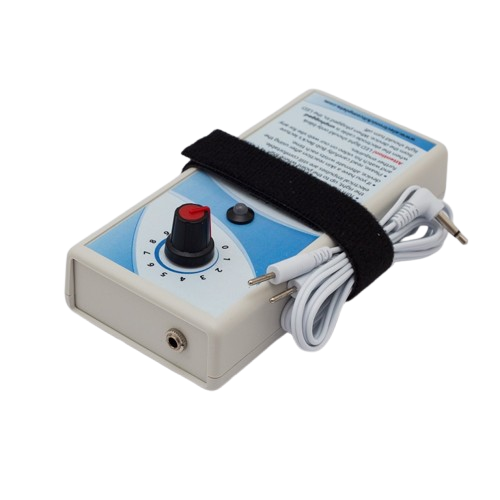

What is Electrical Stimulation? A Guide to Harnessing Electricity for Healing
Does the idea of using electricity on your body sound more like a strange experiment than a genuine path to wellness? If you’ve heard terms like TENS, EMS, or even ‘zappers’ and felt more confused than curious, you are not alone. Many people are understandably wary, and frankly, the mainstream information can be very limited. But the truth is, the principle of electrical stimulation isn’t new or scary; it’s a powerful and often overlooked science with a rich history of supporting the body’s natural vitality and healing processes.
In this guide, I want to cut through the noise and share what I’ve learned on my own journey. We’ll explore the simple science behind how gentle electrical currents can work *with* your body, not against it. You’ll finally understand the real difference between all those confusing acronyms and discover the potential benefits that go far beyond what you might hear about in a typical physical therapist’s office. My goal is to help you feel confident and informed, so you can explore how to safely harness electricity for your own wellness journey.
The Surprising History of Electrical Healing
While it might sound like something from a science fiction movie, using electricity to influence the body’s health is far from a modern invention. In fact, it’s a practice with roots stretching back thousands of years-a fascinating story of discovery, dismissal, and recent rediscovery. Long before batteries and wall sockets, nature provided the first tools for what we now call electrotherapy. This lost history shows that our ancestors understood a fundamental truth: the human body is an electrical system.
From Ancient Electric Fish to 19th-Century Clinics
The story begins in ancient times. Physicians in Greece and Rome documented the use of electric torpedo rays to treat pain from conditions like gout and headaches. They would have patients stand on the live fish, allowing its natural electrical discharge to numb the affected area. Centuries later, in the 1780s, Italian physician Luigi Galvani discovered that electricity could make the muscles of a dead frog twitch, leading to his revolutionary theory of “animal electricity.” This sparked a wave of scientific interest, and by the late 19th century, electrotherapy was a booming field. Doctors used elaborate devices to treat a wide range of ailments, and home-use electrical kits became surprisingly common.
For a time, this was a promising and respected branch of medicine. However, with the rise of the pharmaceutical industry in the early 20th century, the focus shifted dramatically. Pills offered a new, seemingly more straightforward way to manage symptoms. Complex electrical devices, some of which were unfortunately promoted by charlatans, fell out of favor with the medical establishment and were largely forgotten.
The Modern Revival: From Niche to Mainstream
In the last few decades, we’ve seen a powerful resurgence of this “forgotten” science. Mainstream medicine has validated and adopted specific forms of electrical stimulation for targeted purposes. Today, practices like TENS (Transcutaneous Electrical Nerve Stimulation) for pain management and Electrical muscle stimulation (EMS) for strengthening and rehabilitation are standard tools in physical therapy clinics worldwide. While this mainstream acceptance is important, it only scratches the surface of what’s possible. At the same time, independent researchers have been quietly exploring the deeper, more systemic effects of electricity on the body, revisiting ideas that were dismissed a century ago and uncovering new potential for true healing.
How Does Electrical Stimulation Work on the Body?
At its core, your body is an electrical system. Your brain, nerves, and muscles all communicate using tiny electrical impulses. The principle behind electrical stimulation is simple: by introducing gentle, controlled electrical currents from an external source, we can interact with and influence these natural biological processes. This isn’t about shocking the system; it’s about providing a specific frequency and current to encourage a desired response, whether that’s blocking a pain signal, contracting a muscle, or influencing the very energy of your cells.
The Mainstream View: Nerves, Muscles, and Pain Gates
In conventional medicine, electrical stimulation is widely used and understood for its effects on the neuromuscular system. Different devices are designed for specific goals:
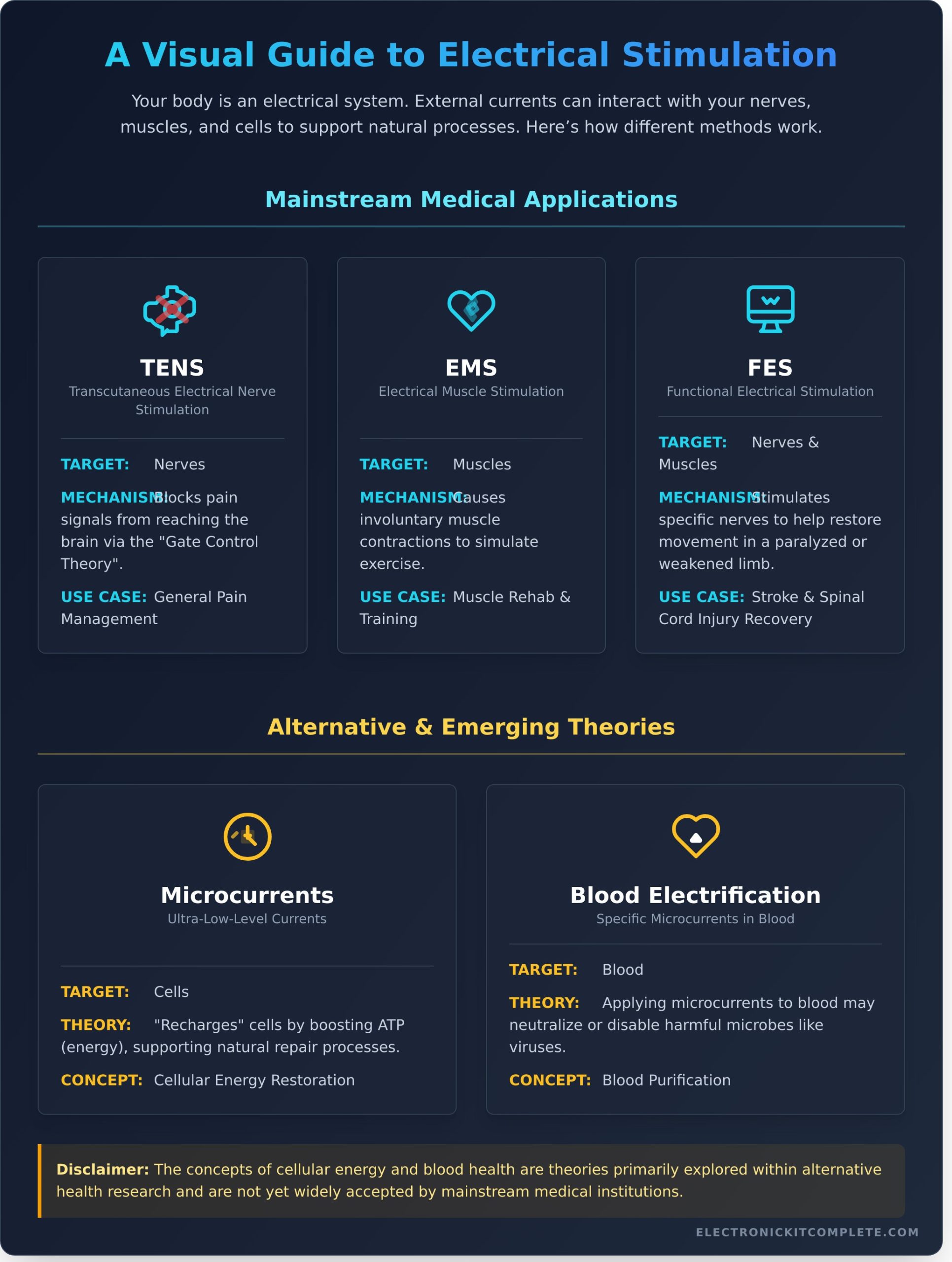
- TENS (Transcutaneous Electrical Nerve Stimulation): These devices work on the “gate control theory” of pain. They send gentle pulses through the skin to stimulate nerve endings, which effectively “closes the gate” that allows pain signals to travel to the brain. It’s like creating pleasant background noise to drown out the message of pain.
- EMS (Electrical Muscle Stimulation): EMS targets the muscles directly, causing them to contract and relax involuntarily. This is commonly used by physical therapists to prevent muscle atrophy after an injury and by athletes to supplement their training.
- FES (Functional Electrical Stimulation): A more advanced application, FES helps restore function in people with paralysis or neurological damage from stroke or spinal cord injury. By stimulating specific nerves, it can help a person move a limb again. On a more complex level, related technologies like Deep Brain Stimulation are used to manage conditions like Parkinson’s disease, showing just how powerful this technology can be.
An Alternative Perspective: Cellular Energy and Blood Health
Beyond the nerves and muscles, some researchers believe electrical currents can influence the body on a much deeper, cellular level. This perspective views the body’s cells as tiny batteries that need to maintain an optimal electrical charge to function properly. When cells are injured or diseased, their voltage can drop, hindering their ability to heal and communicate. In this view, microcurrents-currents so small they are measured in millionths of an amp-can help “recharge” these cells, boosting their energy production (ATP) and supporting natural repair processes. Another fascinating theory is that of ‘blood electrification,’ which proposes that applying specific microcurrents to the blood can neutralize or disable harmful microbes like viruses and bacteria, effectively purifying the blood without harming healthy cells.
This “cellular battery” concept draws a compelling parallel to other complex electrical systems we rely on daily. For instance, the performance of an electric vehicle depends entirely on the health of its battery, which requires specialized, independent testing to accurately assess. For readers interested in how battery diagnostics work in the automotive world, resources like EVdiagnostika.si offer a glimpse into that field.
Disclaimer: It’s important to note that these concepts regarding cellular energy and blood health are theories primarily explored within alternative health research and are not yet widely accepted by mainstream medical institutions.
Common Types of Electrical stimulation for Health & Wellness
When people hear the term “electrical stimulation,” they often picture devices used in physical therapy. But the world of electrical wellness is much broader. While many conventional treatments focus on managing symptoms, a variety of approaches exist, each with a unique goal. Understanding what electrical stimulation is from a medical perspective helps clarify these differences. Generally, we can group these technologies into three main categories based on their intended purpose.
For Pain Management & Muscle Recovery (TENS & EMS)
The most common forms you’ll find in a doctor’s office are TENS and EMS. TENS (Transcutaneous Electrical Nerve Stimulation) units work by sending electrical pulses through the skin to disrupt pain signals before they reach the brain, providing relief for chronic or acute pain. In contrast, EMS (Electrical Muscle Stimulation) causes muscles to contract and is often used by physical therapists to prevent muscle atrophy after an injury or help athletes with recovery. These are typically medical devices focused on treating surface-level symptoms in nerves and muscles.
For General Wellness & Vitality (Microcurrent & PEMF)
Moving beyond symptom management, some devices focus on supporting the body’s overall systems. Microcurrent therapy uses extremely low-level currents, often sub-sensory, with the goal of promoting cellular energy (ATP) production. PEMF (Pulsed Electromagnetic Field) therapy is another popular wellness tool, but it doesn’t send a direct current into the body. Instead, it uses magnetic fields to encourage circulation and support the body’s natural recovery processes. These are often considered wellness tools for enhancing vitality from the inside out.
For Internal Cleansing: The Bob Beck Approach
A truly unique application of electrical stimulation is the method pioneered by Bob Beck. This approach is not focused on muscles, nerves, or bones. Instead, it uses gentle, specific microcurrents applied to the blood flow at the wrist. The primary goal is to support and energize the body’s natural immune functions and defense systems, helping to purify and revitalize the bloodstream. By focusing on the internal environment, it represents a shift from managing external symptoms to enhancing the body’s own power to maintain health. Intrigued by this unique approach? Learn more about the Bob Beck device.
Potential Benefits: What Proponents and Users Report
While we are not doctors and these devices are not medical, it’s worth exploring what researchers, proponents, and everyday users have reported over the years. The core idea behind many forms of electrical stimulation is simple: supporting the body’s own systems to help it function at its best. The focus is often on improving blood flow, which is fundamental to overall health and vitality.
Many people who have incorporated these principles into their wellness routines report a wide range of positive experiences. Proponents suggest these benefits are linked to helping the body’s electrical system and circulation work more efficiently.
Here are some of the commonly reported potential benefits:
- Supporting Physical Comfort: Users often report a reduction in everyday muscle soreness and stiffness.
- Enhanced Vitality: Many describe a noticeable increase in energy and an overall sense of well-being.
- Faster Recovery: Athletes and active individuals suggest it helps them bounce back more quickly after exertion.
- Improved Circulation: The gentle stimulation is believed to support healthy blood flow, which nourishes tissues.
Supporting Physical Comfort and Recovery
One of the most well-known applications of e-stim is for physical comfort. Think of TENS (Transcutaneous Electrical Nerve Stimulation) units, which are widely used for temporary relief from sore and aching muscles. By gently stimulating nerves and muscles, these devices may help ease stiffness and support the body’s recovery process after a long day or a tough workout. The underlying principle is often linked to improving local blood flow, bringing vital oxygen and nutrients to the area.
Enhancing Energy, Circulation, and Vitality
When your circulation is working well, your whole body benefits. Proponents of electrical stimulation believe that by encouraging healthy blood flow, you are helping to deliver nourishment to every cell and tissue. Users frequently report feeling more energized and vibrant. This aligns perfectly with the goal of improving health naturally-by giving your body the circulatory support it needs to thrive, you may unlock a greater sense of vitality.
Aiding the Body’s Natural Cleansing Processes
The Bob Beck protocol specifically focuses on the idea of using microcurrents to support the body’s natural defense and cleansing systems. The theory suggests that these gentle electrical pulses help create an environment where the immune system can do its job more effectively. It’s not about adding something foreign to the body, but rather about empowering your body’s innate ability to maintain balance and wellness. For those interested in exploring this approach, you can learn more about the tools and principles at electronickitcomplete.com.
Is At-Home Electrical Stimulation Safe? Key Considerations
The thought of applying electricity to your body can sound alarming. We get it. However, it’s crucial to distinguish between the danger of a high-voltage shock and the gentle, low-voltage microcurrents used in modern wellness devices. These tools don’t shock you; they work with your body by delivering tiny electrical pulses that are often imperceptible, designed to support its natural functions. When you understand the principles and follow clear guidelines, at-home electrical stimulation becomes a safe and empowering tool for your health journey.
The key is knowledge and responsible use. Think of it not as a shock, but as a signal.
General Safety Guidelines for Any Device
Your body is your best guide. Always begin with the lowest intensity setting and slowly increase it to a level where you feel a slight tingle, but never pain or discomfort. Common sense and listening to your body are paramount.
- Avoid Water: Never use any electronic device in or near water, such as in the bath or shower.
- Sensitive Areas: Do not place electrodes directly over the heart, on the front of the neck, across the head (through the brain), or on open wounds or irritated skin.
- Start Low, Go Slow: Begin with short sessions at a low power level to see how your body responds.
- Stop if Uncomfortable: If you experience any lasting skin irritation or muscle pain, discontinue use and assess the situation.
Contraindications: Who Should Be Cautious?
While this technology is a fantastic tool for many, it is not suitable for everyone. Honesty and safety are our top priorities. Please consult with a licensed healthcare professional before using any form of electrical stimulation if you fall into one of these categories:
- You are pregnant.
- You have a pacemaker, defibrillator, or other implanted electronic device.
- You have a history of epilepsy or seizure disorders.
Why Following a Protocol Matters
Results and safety are not random; they come from correct and consistent application. A proven protocol provides a roadmap, detailing where to place electrodes, for how long, and at what frequency. Following an established method like the Bob Beck Protocol ensures you are applying the technology in a way that is both effective and responsible. It removes the guesswork and helps you confidently work towards your wellness goals. For more information on devices built around this trusted framework, you can explore the kits at Electronic Kit Complete.
Harnessing the Current: Your Next Step in Wellness
From ancient discoveries to modern wellness tools, the journey of using electricity for healing is both long and fascinating. We’ve explored how targeted currents can interact with the body’s natural systems and learned that the potential for at-home electrical stimulation is more accessible than ever. It’s a powerful reminder that sometimes the simplest principles hold the most profound power for our well-being.
If you’re inspired by the pioneering work in this field, you can explore it for yourself. Based on the groundbreaking research of physicist Bob Beck, a straightforward approach now exists that uses simple, low-voltage currents for at-home use. This method is trusted by a worldwide community of wellness seekers who have put this knowledge into practice. Discover the simple, effective device based on Bob Beck’s research. Your journey toward empowered health is just one step away.
Frequently Asked Questions
What is the difference between TENS, EMS, and blood electrification?
While they all use electricity, their purpose is completely different. TENS units are for blocking nerve pain signals. EMS is for contracting muscles to build strength. Blood electrification, based on Bob Beck’s work, is a form of gentle electrical stimulation designed to cleanse the blood. It introduces specific microcurrents to neutralize microbes like viruses and parasites, helping the body from the inside out.
Does electrical stimulation therapy hurt? What does it feel like?
No, it should not be painful. Users typically describe the sensation as a mild tingling or a gentle pulsing under the electrodes on the wrist. A good device allows you to adjust the intensity, so you can start at a very low level and increase it until you find a setting that is comfortable but noticeable. The goal is a gentle sensation, not discomfort.
How often can you use an at-home electrical stimulation device?
For the best results, many people follow the original protocol developed by Bob Beck. This suggests a consistent routine of using the device for about two hours each day for four to six weeks. This initial period is considered a thorough cleanse. After that, you can switch to a maintenance schedule of a few times per week or as you feel is needed.
Are there any scientific studies on using electricity for general health?
You may not see this research promoted by mainstream sources, but it absolutely exists. The original patents from the 1990s demonstrated the technology’s effectiveness in a lab setting. We recommend exploring the Google Patents website and the original papers by Bob Beck. There is a wealth of information available for those who are willing to look beyond conventional channels for answers to their health questions.
Why isn’t blood electrification used in mainstream medicine?
The simple answer often comes down to profit. Blood electrification is a simple, non-patentable technology. It represents a one-time, affordable purchase that empowers individuals to take control of their own wellness. This model doesn’t fit into the pharmaceutical industry’s focus on patentable drugs that require repeat purchases. It’s an effective solution that is just too inexpensive to be profitable for large corporations.
Can electrical stimulation help with improving blood flow and circulation?
Many people believe it can. The theory is that microbes can cause red blood cells to clump together, which hinders their ability to travel through tiny capillaries. By neutralizing these microbes, the electrical stimulation helps the red blood cells to separate and flow freely again. This allows them to carry more oxygen throughout the body, naturally supporting better circulation and overall energy levels.
What should I look for when choosing an at-home device?
It is crucial to choose a device that follows Bob Beck’s proven specifications. Look for a unit that produces a bi-phasic square wave at approximately 3.92 Hz. It must have an adjustable output so you can find a comfortable intensity level. Also, ensure it uses quality components and comes with clear, easy-to-follow instructions so you can begin using it with confidence right away.