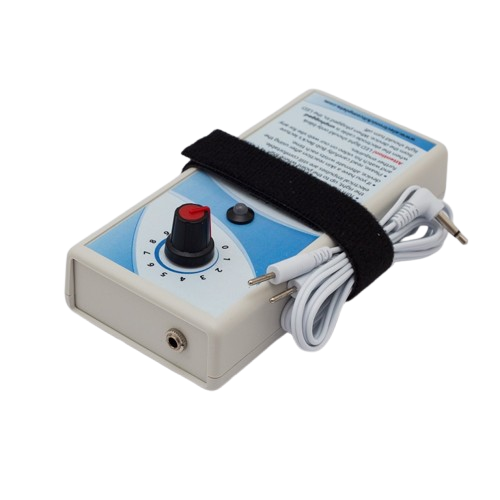

What is an Electrical Stimulator? A Beginner’s Guide to Electrotherapy
Feeling lost in a sea of technical terms like TENS, EMS, and microcurrent? Perhaps the idea of using electricity on your body sounds intimidating, or maybe you’re just skeptical after trying mainstream solutions that fell short. It’s easy to feel overwhelmed when so much information seems designed to confuse you. But what if the principle was actually simple? Your body is already an electrical system. At its core, an electrical stimulator is a device designed to speak your body’s native language-working with its natural currents, not against them.
You don’t need a medical degree to understand this technology. In this straightforward guide, we’re going to cut through all the corporate jargon and complexity. I’ll personally show you the simple science behind how these devices work, what the real differences are between the various types, and how you can confidently choose one to support your own wellness goals. Forget what you’ve been told; let’s discover how simple electrotherapy can be.
Key Takeaways
- Learn how electrotherapy devices work by mimicking the tiny electrical signals your own body uses to communicate.
- Discover the different types of stimulators, from common TENS units to specialized ‘zappers’, and understand why the goal determines the device.
- Get a clear framework for selecting the right electrical stimulator for your personal wellness goals, cutting through the confusion.
- Explore the long history of electrotherapy and why some of the most interesting approaches are often overlooked by the mainstream.
The Core Principle: How Do Electrical Stimulators Talk to Your Body?
Have you ever stopped to think that your body is fundamentally electric? Every thought, every movement, and every sensation is the result of tiny electrical signals traveling through your nervous system. An electrical stimulator, in its simplest form, works by speaking this same electrical language. It doesn’t introduce anything foreign; instead, it mimics the natural pulses your body already uses to communicate with itself.
Mimicking Your Body’s Natural Language
Think of your nervous system as the body’s intricate wiring. When you decide to wave your hand, your brain sends a precise electrical command down this wiring to the muscles in your arm. Devices like the Bob Beck unit are designed to gently introduce their own microcurrents into this system. They aren’t meant to override your body’s signals, but rather to support and interact with these natural electrical pathways, encouraging the body’s own processes.
This interaction can have different effects depending on how and where the pulses are applied. For instance, some forms of electrical stimulation are well-known for pain management. By introducing a specific signal, they can help ‘distract’ or block pain messages from reaching the brain. This is the principle behind technologies like Transcutaneous Electrical Nerve Stimulation (TENS). Other applications might encourage gentle muscle contraction or, as in the Bob Beck protocol, interact with the body on a cellular level.
Key Parameters: What Do Frequency and Waveform Mean?
While it might sound technical, understanding the basics is quite simple. You don’t need to be an electronics hobbyist to grasp what makes your device work. The two most important settings are:
- Frequency: Measured in Hertz (Hz), this is simply how many electrical pulses are delivered per second. Different frequencies can target different effects.
- Waveform: This is the ‘shape’ of the electrical pulse (e.g., square, biphasic). Think of it as the specific dialect being used to communicate with your cells.
The good news is that your device is pre-set with the parameters researched by pioneers like Dr. Beck for its intended purpose.
Safety First: Why This Isn’t Like an Electric Shock
It’s natural to be cautious about using electricity. However, the energy from a therapeutic electrical stimulator is worlds away from a household electric shock. A wall socket delivers high voltage and high current, which is dangerous. In contrast, these devices are typically battery-powered, delivering very low voltage and micro-currents-just enough to communicate with your body’s systems. Modern units have built-in safety controls to ensure the output is always gentle and controlled. As always, following the specific instructions for your device is the key to a safe and beneficial experience.
A Tour of Common Stimulators: From TENS to ‘Zappers’
When you hear the term ‘electrical stimulator’, what comes to mind? For many, it’s the buzzing pads a physical therapist uses for a sore back. But that’s just one piece of a much larger puzzle. The world of electrical stimulation is vast, and the right device depends entirely on the goal-from blocking pain signals to conditioning muscles or even supporting the body’s natural energy systems. Understanding the difference is key to finding what you need.
Let’s take a quick tour of the most common types to see how they differ and where devices like Bob Beck’s fit in.
TENS (Transcutaneous Electrical Nerve Stimulation) for Pain Relief
TENS units are probably the most well-known type of electrical stimulator. Their main job is to provide temporary pain relief for conditions like chronic back pain, arthritis, and sports injuries. The theory behind how TENS therapy works is that the gentle electrical pulses, which create a mild tingling sensation, essentially “distract” the nerves and block pain signals from ever reaching the brain. It’s a widely accepted form of therapy used in clinics and homes worldwide.
EMS (Electrical Muscle Stimulation) for Muscle Conditioning
While TENS “talks” to your nerves, EMS speaks directly to your muscles. An EMS device sends signals that cause muscles to contract and relax, mimicking the process of voluntary exercise. Physical therapists often use it to help prevent muscle atrophy in patients after an injury, and athletes use it to supplement their training and speed up recovery. It’s a powerful tool, but it’s important to remember that EMS is a supplement, not a substitute for an active lifestyle.
Microcurrent and Bio-Electric Devices for Wellness
This is where things get really interesting and move beyond simple pain management or muscle twitching. A third category of devices uses much, much lower levels of electricity, often called microcurrents. The idea here isn’t to block nerves or force muscle contractions, but to work with the body’s own bio-electric system. The theory is that these subtle currents can support natural cellular energy and function. This is the realm where devices like ‘zappers’ and blood electrifiers, such as the Bob Beck unit, operate, focusing on overall wellness rather than a specific symptom.

Beyond the Mainstream: The World of Alternative Electrotherapy
The idea of using electricity for health is not a modern fad; it has a rich and often overlooked history. While today’s mainstream medicine has specific applications for it-you can read about the basics in this guide on What is Electrical Stimulation?-many promising avenues explored by independent researchers have been left by the wayside. This is a world that encourages personal research, curiosity, and taking an active role in your own wellness journey. It’s about looking beyond the standard options and exploring what else might be possible.
The History of Bio-Electricity: From Galvani to Beck
The story begins centuries ago with experiments like Luigi Galvani’s, which showed that electrical sparks could make a frog’s legs twitch, revealing a deep connection between electricity and life itself. Throughout the 20th century, brilliant minds like Royal Rife and Georges Lakhovsky continued this exploration, often outside of conventional institutions. Physicist Bob Beck is a key figure in this modern lineage, known for taking complex concepts and creating simple, accessible devices for the average person. He saw his work not as an invention, but as a rediscovery and continuation of this long tradition. Interested in the history? Explore the research of Bob Beck.
The Bob Beck Protocol: A Closer Look at ‘Blood Electrification’
At the heart of Bob Beck’s work is his protocol for what he termed ‘blood electrification.’ The theory is straightforward: applying gentle, specific microcurrents to the blood as it flows through the arteries at the wrist. This isn’t about shocking the body; it’s a non-invasive process using a very low-level electrical current from a simple electrical stimulator. The stated purpose is to support the body’s natural terrain and promote overall wellness, not to diagnose or treat any specific disease. It’s an approach focused on foundational health from the inside out.
The Hobbyist and DIY Approach
Unlike complex, sealed commercial medical devices that are often a ‘black box’ to the user, the Bob Beck device was designed to be understood and even built by hobbyists. This DIY ethos is powerful. When you can assemble your own device from a kit, you gain a unique understanding of how it works and what it’s doing. This control and knowledge demystify the technology, empowering you to take personal responsibility for your wellness tools. It’s a fundamental shift from being a passive patient to an active, informed participant in your own health.
How to Choose the Right Electrical Stimulator for You
Navigating the world of personal wellness devices can feel overwhelming. With so many options and bold claims, it’s hard to know where to start. Finding the right electrical stimulator for you doesn’t have to be complicated. The secret is to ignore the marketing hype and focus on a simple, practical framework. It all begins with understanding your personal goals.
Step 1: Define Your Primary Goal
Before you look at any device, you must first define your “why.” The purpose dictates the tool. Different devices are designed for very different outcomes. Are you trying to:
- Manage acute or chronic pain? A Transcutaneous Electrical Nerve Stimulation (TENS) unit is specifically designed to block pain signals.
- Improve muscle recovery or rehabilitation? An Electrical Muscle Stimulation (EMS) device causes muscle contractions, which is ideal for recovery and strength.
- Explore general wellness and bio-hacking? A Beck-style device, which works on the principles of blood electrification, is a tool for those on a journey of holistic health exploration.
Step 2: Key Features to Look For
Once you know your goal, you can compare the features that truly matter. Look past the flashy packaging and focus on the fundamentals that ensure a safe and effective experience:
- Adjustable Intensity: You must be in control. Variable settings allow you to find a level that is comfortable and effective for you.
- Clear Instructions: A good device comes with a simple, easy-to-understand user guide. You should never be left guessing.
- Component Quality: Pay attention to the electrodes, wires, and the main unit itself. High-quality parts are more reliable and last longer.
- Portability & Power: Consider if you need a portable unit and whether you prefer rechargeable or standard batteries.
Step 3: Commercial Product vs. Complete Kit
Many mass-market devices are sealed “black boxes.” You can’t see what’s inside, and you have to trust the manufacturer’s claims. A complete kit, on the other hand, offers total transparency. The primary benefit is knowing exactly what your device is made of and how it works. This simplicity and honesty are central to the work of pioneers like Bob Beck. A kit empowers you with knowledge, not just a product. When you’re ready to see the difference transparency makes, see what’s included in our complete Bob Beck device kit.
Embrace Your Path to Electrical Wellness
We’ve journeyed through the fascinating world of electrotherapy, demystifying how these devices use gentle currents to communicate with your body’s natural systems. You’ve seen the wide spectrum of options, from common TENS units for pain relief to the alternative approaches pioneered by independent researchers. Knowing how to navigate these choices is the first step. The most important takeaway is that the right electrical stimulator is the one that aligns with your personal research and wellness goals.
If your path is leading you toward a simple, non-invasive, and powerful tool for self-care, we believe the Bob Beck protocol is an incredible place to start. Based on the independent research of Bob Beck himself, our device is sold as a complete, easy-to-use kit, so you have everything you need to begin. As a trusted source with worldwide shipping, we’ve helped countless individuals just like you.
Discover the simple, effective Bob Beck device for your wellness journey.
Your health is in your hands. We encourage you to continue learning and are here to support you as you explore the incredible potential of electrotherapy.
Frequently Asked Questions
Is using an electrical stimulator painful?
No, it should not be painful at all. A properly used Bob Beck device creates a gentle tingling or pulsing sensation over the arteries on your wrist. You are in complete control of the intensity with a simple dial, so you can set it to a level that is noticeable but still comfortable. If you ever feel a stinging sensation, simply turn down the intensity or check that your electrodes have a good, moist connection to your skin.
How often and for how long can I use an electrical stimulator?
The original protocol developed by Bob Beck suggests a daily session of two hours. Many people follow this schedule for about six to eight weeks as they pursue their personal wellness goals. After this initial period, some users switch to a maintenance schedule of a few sessions per week. It is always important to listen to your body and stay well-hydrated, especially when you first begin using the device. Remember, this is your personal research journey.
What’s the main difference between a TENS unit and a Bob Beck device?
The primary difference is their intended purpose and technical specifications. A TENS unit is designed to block pain signals by stimulating surface nerves and is often used for muscle pain. A Bob Beck device, however, is designed to introduce a very specific, low-frequency microcurrent directly into the bloodstream through the wrist arteries. Its purpose, as outlined by Bob Beck, is not for pain relief but for what he termed “blood electrification” to support the body’s natural systems.
Are there any people who should not use electrical stimulators?
Yes, absolutely. For safety, individuals with pacemakers, other implanted electronic devices, or who are pregnant should not use this device. The electrical currents could potentially interfere with the function of implanted electronics. As a general precaution, our devices are sold for experimental purposes only. If you have any serious health concerns or questions, it is essential that you consult with a licensed healthcare professional before using any kind of electrical stimulator or starting a new wellness protocol.
Do I need a prescription to buy an electrical stimulator?
You do not need a prescription to buy one of our Bob Beck devices. This is because we offer them as electronic kits and devices for personal research and experimentation, not as medical devices intended to treat a specific condition. Medical-grade stimulators that make specific health claims often do require a prescription from a doctor. Our kits are for hobbyists and researchers who want to explore Bob Beck’s work for themselves, which allows us to provide them directly.
How do I know if the device is working correctly?
Checking your device is simple. First, the LED light should flash in sync with each electrical pulse, giving you a clear visual confirmation that it is on and outputting a signal. Second, and most importantly, you should feel it. When the electrodes are properly placed on your wrists and you turn the dial up, you will feel a gentle, rhythmic tingling or pulsing. If the light is on but you feel nothing, check your battery and electrode connections.