
Compression Therapy: A User’s Guide to Boosting Circulation and Recovery
Do your legs feel heavy and achy at the end of the day? Maybe your ankles are swollen after a long shift on your feet, or you’re just not bouncing back from workouts the way you used to. Many of us accept this discomfort as a normal part of life, but it’s often a sign that our circulation needs a little help. What if there was a surprisingly simple and effective method to help your body move fluids and reduce that feeling of fatigue? This is where compression therapy comes in, offering a natural way to support your system without reaching for a pill bottle.
I’ve looked into this a lot, and I want to share what I’ve found. This guide is a straightforward user’s manual for anyone curious about how this works. We’ll break down the science behind how compression boosts circulation, explore its incredible benefits for swelling and muscle recovery, and show you how to choose the right method for your needs. By the end, you’ll have the confidence to use compression safely at home and feel the relief for yourself-a simple tool for better overall wellness.
Key Takeaways
- Discover how applying gentle, consistent pressure can naturally support your body’s circulation and lymphatic systems.
- Learn the specific ways compression therapy can reduce swelling, ease muscle soreness, and speed up your body’s recovery process.
- Find the right tool for your needs by understanding the key differences between simple compression garments and advanced systems.
- Gain the confidence to use compression safely and effectively at home as a powerful part of your overall wellness routine.
What is Compression Therapy, Really? (Beyond the Basics)
You’ve probably heard the term compression therapy, but what does it actually mean? Forget complicated medical jargon. At its core, it’s about applying gentle, consistent pressure to a part of your body, usually your legs or arms. Think of it as a supportive hug for your limbs-a helping hand that assists your body’s natural circulatory and waste-removal processes. This isn’t some high-tech treatment reserved for hospital beds; it’s a simple, powerful principle you can use to boost your everyday wellness and feel better in your own skin.
How Gentle Pressure Unlocks Better Blood Flow
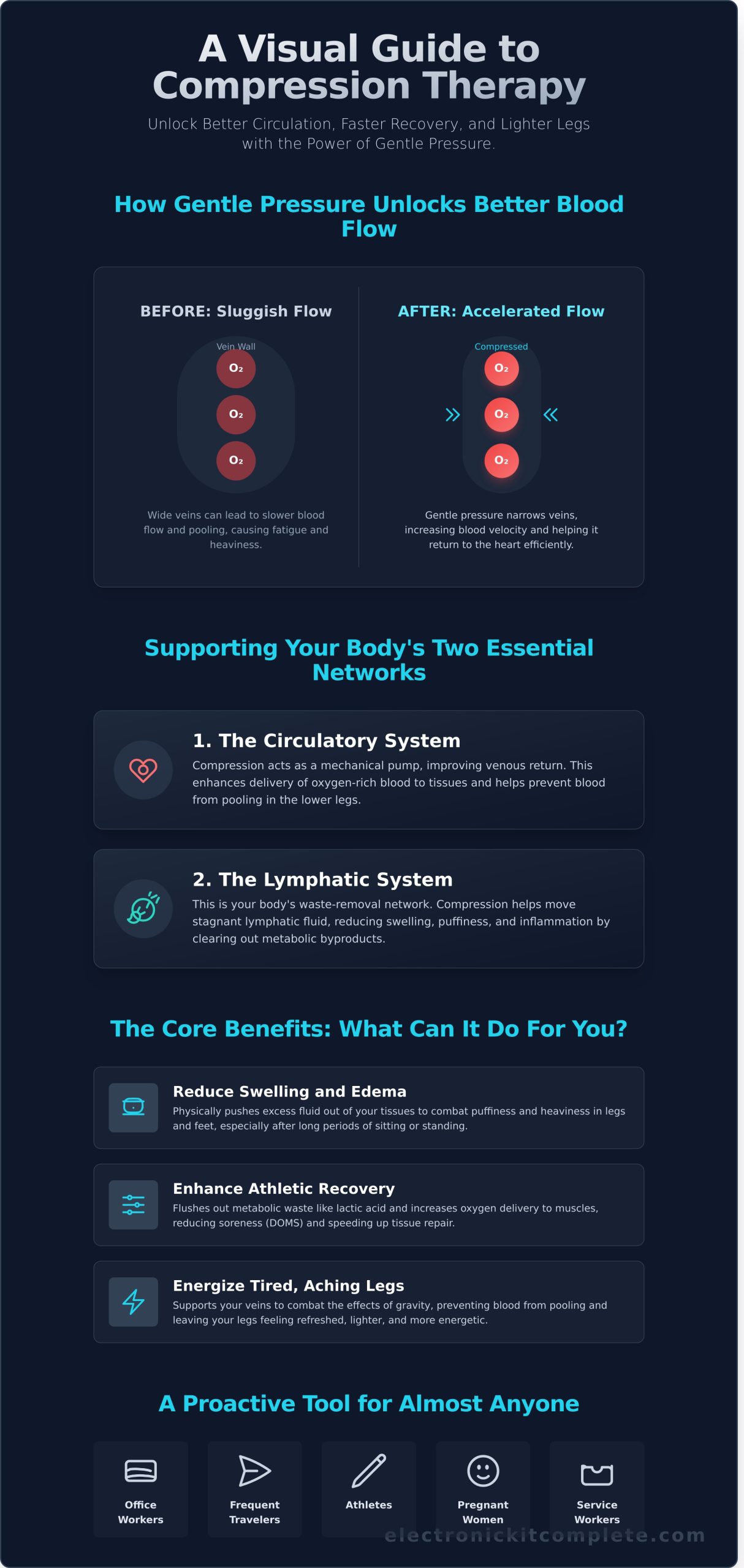
The magic of compression therapy lies in a simple physical principle: squeezing. Imagine gently pinching a garden hose-the water flows faster and with more force. Compression works similarly on your body. By applying external pressure, it reduces the diameter of your major veins. This simple change increases the speed and efficiency of blood flow, making it much easier for deoxygenated blood in your limbs to fight gravity and travel back up to your heart. It’s a mechanical boost for your entire circulatory system.
The Lymphatic System: Your Body’s Unsung Hero
Beyond blood flow, there’s another crucial network at play: the lymphatic system. This is your body’s sophisticated waste-removal and sanitation network, responsible for clearing out metabolic waste, excess fluid, and toxins. Sometimes, this fluid can become stagnant, leading to that familiar feeling of puffiness, swelling, and discomfort. Compression gives this passive system a much-needed nudge, helping to manually push stagnant lymphatic fluid along its path, which is key to reducing inflammation and detoxifying tissues.
Debunking the Myth: It’s Not Just for Athletes
Many people associate compression with elite athletes or post-surgery recovery, but its benefits are far more universal. The truth is, it’s a proactive tool for almost anyone. If you’re an office worker who sits for eight hours a day, a frequent traveler stuck on long flights, or a pregnant woman experiencing swollen ankles, you can benefit. This is why you see so many different types of garments, from full-leg sleeves to the more common Compression stockings, being used by people from all walks of life to combat the effects of a sedentary lifestyle.
The Core Benefits: What Can Compression Therapy Do For You?
Beyond simply feeling good, compression therapy is about giving your body a powerful, natural tool to accelerate its own healing and recovery processes. It’s a simple mechanical action that produces profound biological results. Whether you’re an athlete, a frequent traveler, or someone who spends all day on your feet, the benefits are tangible and can make a real difference in your daily life.
Reduce Swelling and Fluid Retention (Edema)
Ever get off a long flight or finish a long shift and feel like your legs are heavy and puffy? That’s often due to fluid retention, or edema. Compression works by applying gentle, consistent pressure to the limbs, physically pushing this excess fluid out of your tissues and back into circulation where it can be processed. It’s a straightforward way to combat that heavy feeling and restore a sense of lightness and comfort to your legs and feet.
Enhance Athletic Recovery and Reduce Muscle Soreness
For anyone who trains hard, recovery is just as important as the workout itself. Compression helps your body bounce back faster by improving the circulation that is critical for muscle repair. This process helps to:
- Flush out metabolic waste products, like lactic acid, that contribute to soreness.
- Increase the delivery of oxygen-rich blood to your muscles, which speeds up tissue repair.
- Significantly reduce the effects of Delayed Onset Muscle Soreness (DOMS).
The result is less downtime and more effective training sessions. You can get back to doing what you love, feeling stronger and more prepared.
Energize Your Legs and Improve Circulation
Tired, aching, and restless legs are often a sign that your circulatory system is working overtime. When blood flow is sluggish, it can pool in the lower extremities, leading to fatigue and discomfort. This is where compression therapy truly shines. It acts as a support system for your veins; as the American Venous Forum explains compression therapy, the external pressure helps your veins and lymphatic system move fluid more efficiently. This simple support can make a world of difference, leaving your legs feeling refreshed, lighter, and more energetic, especially after a long day.
Types of Compression Therapy: From Simple Socks to Advanced Systems
Once you decide to explore compression, you’ll find it’s not a one-size-fits-all solution. The world of compression therapy is broad, with different tools designed for very different goals. The core principle, as explained in a comprehensive review of compression therapy from the National Institutes of Health, is applying controlled pressure to improve circulation. How that pressure is delivered separates the options into two main categories: static and dynamic.
Static Compression: Garments and Wraps
This is the most common form you’ll encounter. Static compression involves garments like socks, stockings, and sleeves that provide a constant, steady pressure to the limb. They work by gently squeezing your veins, helping blood flow back toward your heart. The key is finding the right pressure level, measured in millimeters of mercury (mmHg).
- Light (8-15 mmHg): Great for energizing tired, achy legs or for a little extra support during long days on your feet.
- Medium (15-20 mmHg): The go-to for travel, preventing swelling on flights, and for managing mild varicose veins.
- Firm (20-30+ mmHg): Typically used under medical guidance for managing more significant issues like lymphedema or DVT.
These garments are designed for all-day wear. The right fit is crucial; a garment that’s too loose won’t be effective, and one that’s too tight can be harmful. Look for breathable materials that feel comfortable against your skin.
Dynamic Compression: Pneumatic Devices (Compression Boots)
Think of this as an active, high-tech massage. Dynamic compression systems, like the popular compression boots, use inflatable sleeves that wrap around your legs, arms, or hips. An air pump fills and empties different chambers in a sequence, creating a pulsing or “milking” action that pushes fluid and metabolic waste out of the limbs.
Unlike static garments, these devices are used for short, intensive recovery sessions, usually lasting 20 to 60 minutes. While once found only in professional training rooms, these systems are now widely available for convenient at-home use, making elite-level recovery accessible to everyone.
Choosing the Right Method for Your Needs
So, which one is for you? Ask yourself what your primary goal is.
If you need daily support, are planning a long flight, or manage a chronic condition that causes swelling, start with static compression garments. They are a simple, effective, and affordable first step.
If your main goal is to accelerate recovery after intense workouts, reduce muscle soreness, and get a deep, restorative massage, then a dynamic compression device is an excellent tool to consider. Many people find that using both-static socks for daily wear and dynamic boots for post-exercise recovery-offers a complete solution for their wellness routine.
How to Use Compression Therapy Safely and Effectively at Home
Starting something new for your health can feel a bit daunting, but I’m here to show you how straightforward this can be. Many people hear about the benefits but are hesitant to start on their own. The key isn’t some complex medical secret; it’s about getting the right fit and, most importantly, listening to what your body is telling you. Let’s walk through it together so you can begin with confidence.
Getting the Right Fit and Pressure
This is the most critical step. A garment that’s too loose is ineffective, and one that’s too tight can restrict circulation and cause harm. To find your size for socks or sleeves, grab a soft measuring tape. Measure the circumference of your ankle at its narrowest point and your calf at its widest. Always compare these numbers to the manufacturer’s sizing chart-don’t just guess. If you’re new to compression, it’s wise to start with a lower pressure level, like 15-20 mmHg, to let your body adapt.
Your First Session: A Step-by-Step Guide
Ready to try it? Here’s how to make your first experience a success, whether you’re using a simple garment or a more advanced device.
- Start with clean, dry skin. Avoid applying lotions or oils right before, as they can degrade the elastic fibers over time.
- For garments like socks or sleeves: The best time to put them on is first thing in the morning, before gravity causes any swelling to set in.
- For pneumatic devices: Find a comfortable spot to sit or recline. Set a timer for 20 to 30 minutes, choose a gentle pressure setting, and simply relax.
- Pay attention. The sensation should be a firm, supportive hug, not a painful squeeze. Your toes should not feel numb or turn a different color.
Common Mistakes to Avoid
Steer clear of these common pitfalls to ensure your compression therapy journey is a positive one. Ignoring these can lead to discomfort or skin issues.
- Don’t wear garments that are bunched or folded over. A wrinkle or fold creates a pressure band that can cut off circulation. Smooth them out completely.
- Avoid wearing compression to bed unless specifically advised by a professional. Your circulatory needs are different when lying flat for long periods.
- Never push through pain. If you feel pinching, tingling, or sharp pain, take the garment off. It’s a clear sign the pressure or fit is wrong for you.
- Don’t ignore skin irritation. After removing your compression, check your skin for any redness or chafing that doesn’t disappear quickly.
You are in control of your own wellness journey. By following these simple guidelines, you can make this powerful tool work for you. True health is often about finding simple, effective solutions that have been overlooked. For more insights into accessible wellness tools, you might find some interesting perspectives at electronickitcomplete.com.
Integrating Compression with a Holistic Health Approach
True wellness isn’t about finding a single magic bullet. It’s about building a toolkit of supportive practices that work together. Think of compression therapy as one of the most reliable tools you can have. It provides incredible physical support, but its true power is unlocked when you combine it with a proactive, holistic approach to your health. Taking responsibility for your well-being means looking at the whole picture-from what you do to the very energy that powers your body.
The Power of Movement and Hydration
Compression garments work with your body, not for it. Their effectiveness is magnified when you lead an active life. Even simple movements like a daily walk activate the ‘muscle pump’ in your calves, and compression gives that natural process a significant boost. Likewise, staying properly hydrated is essential. Water is the medium for all your body’s electrical and chemical processes, and it’s critical for healthy blood flow and fluid balance. Use compression as a powerful ally, not a substitute for these foundational habits.
Mechanical and Electrical Energy in the Body
At its core, compression is a form of beneficial mechanical energy. It applies physical pressure to assist your body’s circulatory system, helping it perform its job more efficiently. But our bodies are far more complex than simple mechanics. Every cell, every nerve, and every thought is powered by subtle electrical currents. Understanding how to support both the physical (mechanical) and energetic (electrical) systems is, in my opinion, the key to profound health.
Exploring Other Non-Invasive Therapies
Many people find that combining compression therapy with other non-invasive methods creates a powerful synergistic effect. This can include practices like:
- Massage Therapy
- Gentle Stretching or Yoga
- Hot and Cold (Temperature) Therapy
Other approaches go even deeper, focusing on supporting the body’s own bio-electric field. This is a fascinating area of self-healing that many are now discovering. If you’re curious about how bio-electricity can support your body’s natural vitality, we invite you to explore the principles behind our work.
Embrace a Healthier Flow in Your Life
You now have a clear roadmap for using compression therapy to enhance your body’s natural healing processes. We’ve seen how it’s much more than just tight socks-it’s a scientifically-backed method for boosting circulation, reducing swelling, and accelerating recovery. By choosing the right type of compression for your needs and integrating it safely into your daily routine, you are taking a significant, proactive step towards better physical well-being. This commitment to improving your body’s fundamental systems is the cornerstone of a truly holistic health approach.
If exploring foundational wellness is your goal, your journey doesn’t have to stop here. For those curious about alternative paths to vitality, we encourage you to look into other pioneering methods. Discover the Bob Beck device and its unique approach to wellness.
Built upon the groundbreaking research of Bob Beck, our devices are designed to support your body’s innate electrical nature. We are here to help you on your path, offering personal support from our team and shipping our kits worldwide from Europe. Take the next step in your wellness exploration today.
Frequently Asked Questions
How long does it take to see results from compression therapy?
Many people experience immediate relief from symptoms like achiness and swelling the first time they use compression garments. For more significant, long-term benefits like improved circulation and vein support, consistent use is necessary. You may start to see more lasting improvements after several weeks of daily wear. The exact timeline depends on your specific condition and consistency, but both immediate and gradual results are common.
Can compression therapy help with varicose veins or spider veins?
Yes, it is highly effective for managing symptoms of varicose and spider veins. By applying steady pressure, compression garments improve blood flow and reduce pressure inside the veins. This can significantly lessen the associated pain, swelling, and heaviness. While it won’t eliminate existing veins, it’s a powerful tool to slow their progression, prevent new ones from forming, and provide daily comfort and support for your legs.
Is it safe to use compression therapy every day?
For most individuals, daily use is not only safe but often recommended, especially for managing chronic circulatory issues. The key is ensuring a proper fit-the garments should be snug but not painful. It is also important to maintain skin health by washing the garments regularly and ensuring your skin is clean and dry before putting them on. If you have any specific health concerns, it’s always best to consult with a healthcare provider.
What’s the difference between medical-grade and athletic compression socks?
The primary differences are pressure level and design. Medical-grade garments have a precise pressure rating (measured in mmHg) and use graduated compression, meaning they are tightest at the ankle and become looser up the leg to effectively move fluid. Athletic compression often provides more uniform or zoned pressure designed to support muscles during activity and enhance recovery. Medical-grade is for treating conditions, while athletic is for performance.
Can compression therapy help reduce the appearance of cellulite?
Compression therapy can create a temporary improvement in the appearance of cellulite. The pressure helps to reduce excess fluid retention in the tissues and smooth the skin’s surface, making dimples less noticeable. However, this effect is cosmetic and temporary. It does not change the underlying fat structure that causes cellulite, and the appearance will return to normal after you remove the garment. It is not a permanent solution for cellulite.
Should I feel any pain or discomfort while using compression therapy?
No, you should not feel pain. Proper compression therapy provides a feeling of firm support and relief, much like a gentle, consistent hug. If you experience any pain, numbness, tingling, or skin discoloration, it is a clear sign that the garment is too tight or improperly fitted. You should remove it immediately and re-evaluate your sizing. The goal is to alleviate discomfort, not cause it, so a correct fit is essential.